Every great garment begins with fabric, and every fabric begins with fiber. For designers, knowing the difference between a worsted and a woolen, or why a “100% silk” label leaves no room for error, is not trivia. It shapes cost, quality, care and, in the United States, what you are legally allowed to say on your label. Here is a primer.
Fibers: natural and manufactured
Fibers fall into two broad groups. Natural fibers come from plants (cotton, linen) or animals (wool, silk, cashmere). Manufactured fibers are made through industrial processes, including fibers regenerated from plant material, such as rayon and lyocell, and synthetics such as polyester, nylon and spandex.
The Federal Trade Commission, which enforces U.S. textile labeling rules, requires labels to identify manufactured fibers by generic names. Its list includes acetate, acrylic, lyocell, nylon, polyester, rayon, spandex and others, and it also accepts names from the international ISO standard. That is why you may see “viscose” or “elastane” on labels: the FTC notes that the ISO standard uses viscose for the predominant form of rayon, and elastane for spandex, and that either name may be used.
A brand name, such as a trademarked stretch fiber, may appear on a label only alongside the generic name, in lettering of equal size and conspicuousness.
Weaves and knits
Fabric is made by interlacing or looping yarn. In weaving, warp threads run lengthwise on the loom and weft threads pass over and under them crosswise, a structure you can see clearly in hand-woven cloths such as kente. The pattern of interlacing creates the weave: plain weaves alternate over and under; twills step the pattern to create diagonal lines, as in denim or gabardine; satins float threads over several others for a smooth, lustrous surface.
Knits are made by interlooping yarn, which gives them natural stretch. T-shirts, sweaters and most activewear are knits.
Then comes finishing: washing, brushing, pressing and other treatments that change a fabric’s hand and appearance. Italian wool districts such as Biella are known for this stage of the process. (Read our guide to Italy’s textile districts.)
How to read a fiber content label
Under the FTC’s rules, most clothing must carry a label disclosing fiber content, country of origin and the business responsible. Some key rules for fiber content:
- Order by weight. Generic fiber names and percentages by weight must be listed in order of predominance, for example “65% rayon, 35% polyester.”
- The 5% rule. In general, fibers under 5% of the total weight should be listed as “other fiber” rather than by name. Two exceptions: wool must always be named, and a fiber with a functional purpose, such as 4% spandex for stretch, may be named.
- “All” or “100%.” A single-fiber product may say either “100% wool” or “All wool.”
- Trims are often exempt. Linings used for structure, small amounts of ornamentation and decorative trim may not need to be counted, though labels may need phrases such as “exclusive of decoration.”
Tolerances: why “100%” means 100%
The FTC allows a 3% tolerance on stated fiber percentages to account for manufacturing variation. A label saying 40% cotton may be accurate if the fabric contains between 37% and 43%. But there is no tolerance for single-fiber claims. The FTC’s own example: a blouse made of 97% silk and 3% polyester cannot be labeled “100% silk.”
Cotton, cashmere and fine wool
Some fibers carry special rules.
- Premium cottons. You may name a type of cotton, such as Pima or Egyptian, only truthfully. If half the cotton in a shirt is Pima, the label must say so, for example “100% Cotton (50% Pima).”
- Cashmere. Under the Wool Products Labeling Act, fiber can be called cashmere only if it is the fine, dehaired undercoat of the Cashmere goat, with an average diameter of no more than 19 microns, and no more than 3% by weight of fibers averaging over 30 microns. Otherwise it must be labeled wool.
- “Super” numbers. Terms such as “Super 120’s” describe wool fineness and are legally defined. For example, “Super 100’s” means an average fiber diameter of 18.75 microns or finer, and “Super 120’s” means 17.75 microns or finer. The higher the number, the finer the wool.
- Recycled wool. Wool returned to a fibrous state after being made into a product must be labeled “recycled wool.”
Care labels
A separate FTC rule, the Care Labeling Rule at 16 CFR Part 423, requires manufacturers and importers to attach care labels that consumers can find at the point of sale and refer to throughout the product’s life. Labels must give either a washing or a drycleaning instruction. Washing instructions must say whether to wash by hand or machine and, unless hot water up to 145°F will not harm the garment, a water temperature. If a product cannot be cleaned by any method without damage, the label must say so. Manufacturers must also have a reasonable basis for the care instructions they give.
Why this matters
- Cost. Fiber and fineness drive price. Knowing the rules helps you compare quotes honestly.
- Trust. Accurate labels protect your reputation with customers and stores.
- Design. Understanding how fibers and weaves behave lets you choose fabric that drapes, wears and ages the way you intend.
Read on: starting a fashion label in New York and sustainable fashion labels explained.
Find talent in the MOAM directory · Subscribe to The MOAM List · Follow MOAM on Instagram @moam_co and Facebook makingofamogul · Tips and corrections: hello@makingofamogul.com
Sources
- Federal Trade Commission, Threading Your Way Through the Labeling Requirements Under the Textile and Wool Acts
- eCFR, 16 CFR Part 423, Care Labeling of Textile Wearing Apparel and Certain Piece Goods
- Smarthistory, “Kente cloth” (warp and weft)
- Unioncamere, “Biella Textiles,” Google Arts & Culture
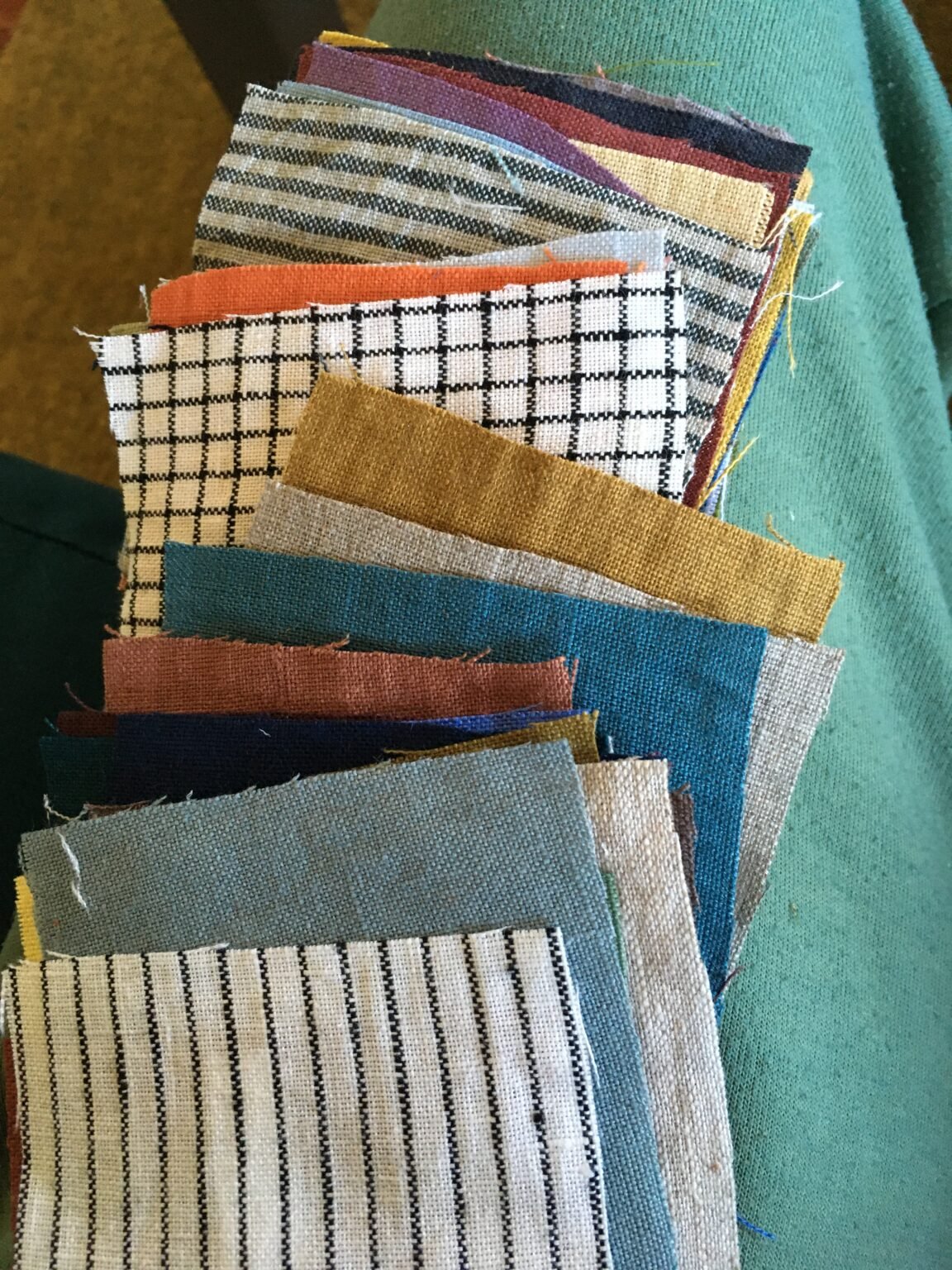
Photo credits: “Fabric swatches” by Thegreatmutata, via Wikimedia Commons, CC0 (https://creativecommons.org/publicdomain/zero/1.0/deed.en)
Editor’s note: regulatory information in this article was checked against FTC guidance and the eCFR in October 2026. It is a simplified summary, not legal advice.