New York, New York · Part 6 · Fashion
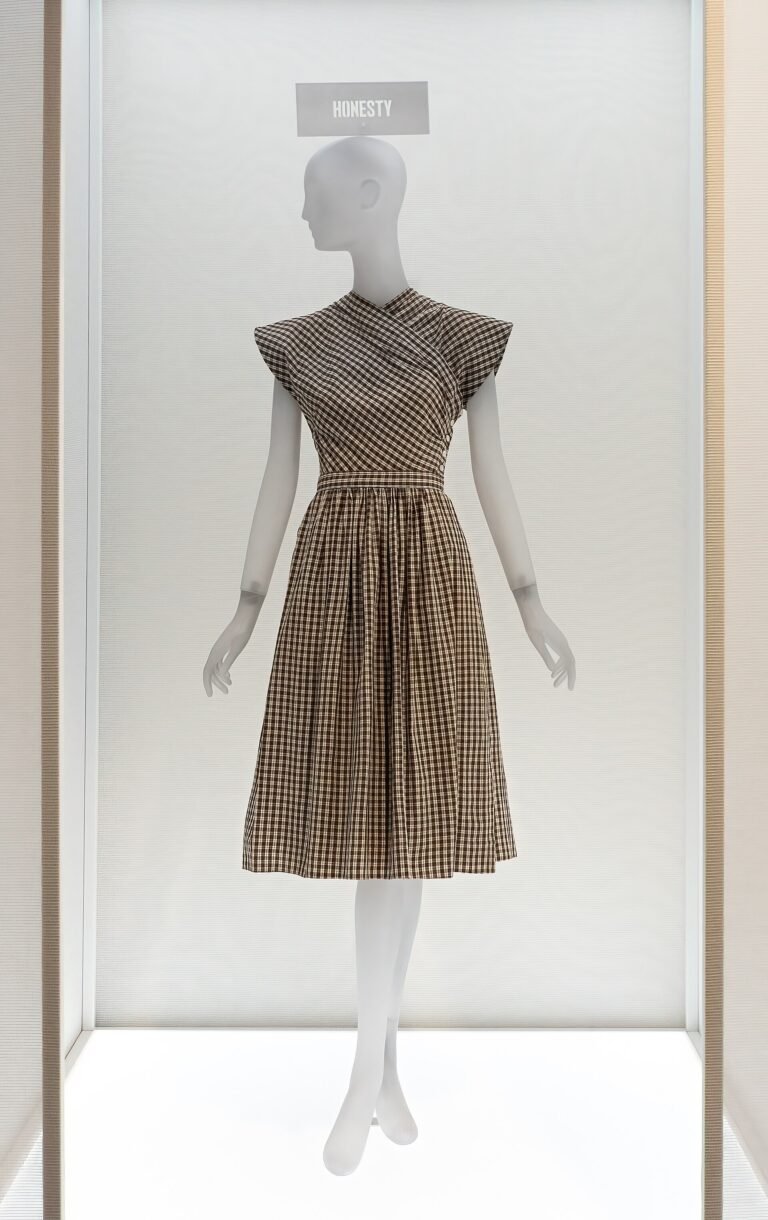
In 1942, in the middle of the war, Claire McCardell worked with Harper’s Bazaar on a dress functional enough for housework and elegant enough to be seen in. (National Women’s History Museum) The result was the Popover, a simple wrap of durable cotton with a matching mitt attached at the waist, made so it could be easily reproduced in the factories of New York’s Garment District. The New York Historical counts more than 50,000 of them. (The New York Historical)
The Popover could go from the kitchen to the beach to a cocktail party, WWD later noted. (WWD) It was clever, adaptable and entirely American. A decade later, Lord & Taylor was still advertising it, for $19.95. (Maryland Center for History and Culture)
From Frederick to the Place des Vosges
McCardell was born on May 24, 1905, in Frederick, Maryland. Her father, a state senator and bank president, steered her to Hood College, but she moved to New York to study at Parsons, then called the New York School of Fine and Applied Art. In 1927 she went to Paris to continue at the school’s branch on the Place des Vosges, where students could buy samples by couturiers such as Madeleine Vionnet and take them apart to see how they were made. (Wikipedia)
Back in New York, she became an assistant to the designer Robert Turk, who took her with him to the larger firm Townley Frocks. In 1932, Turk drowned, and McCardell, then 27, was asked to finish his fall line. (Wikipedia)
The Monastic and the copycats
In 1938 she introduced the Monastic Dress, a bias-cut, tentlike dress. It was so widely copied that the cost of fighting the knockoffs helped drive Townley out of business. McCardell moved to Hattie Carnegie, but her designs did not suit Carnegie’s clients, who wanted something more elaborate. She attended her last Paris show in 1940. From then on, she avoided French influence altogether. (Wikipedia)
Townley reopened under new management in 1940, and McCardell returned for the rest of her life. The labels now read “Claire McCardell Clothes by Townley,” making her one of the first American designers known by name. (Wikipedia) That was rare on Seventh Avenue, where most manufacturers were owned by men who relied on anonymous family members or unnamed designers, as the McCardell scholar Julie Eilber has explained. (The New York Historical)
The garments had to be easy to wear, to pack, and to launder.
Julie Eilber, to The New York Historical
Designing for a woman on her own
McCardell used menswear woolens and, unusually for the time, humble cottons, cutting them on the bias so woven fabric would move almost like a knit. She put fastenings at the front or side, so a woman living independently could dress herself. When her models needed comfortable shoes for the runway, she worked with the Capezio dance-shoe company on ballet slippers made for the street, in fabrics that matched her clothes. (The New York Historical) The National Women’s History Museum credits her with wrap skirts, ballet flats, strapless swimsuits, patch pockets on dresses and an early version of the capsule wardrobe. (National Women’s History Museum)
The war sharpened her case. With fabric rationed, she worked cotton and twill into day and evening clothes, and with Paris cut off, Lord & Taylor put her designs at the center of its marketing. WWD calls the result the moment “the chic American Look was born.” (WWD)
The cover, and the plaque
On May 2, 1955, McCardell was on the cover of Time. She was diagnosed with terminal colon cancer in 1957 and died on March 22, 1958, at 52. (Wikipedia)
Her plaque on the Fashion Walk of Fame, set into the Seventh Avenue sidewalk a few blocks from where her clothes were cut, calls her “one of the most important designers of the 20th Century” and credits her with helping create the American Look. (Fashion Walk of Fame) The New York Historical has shown one of the 50,000 Popovers in an installation called Rationing Fashion: Claire McCardell’s Wartime Innovation. (The New York Historical)
Why she still matters
Every wrap dress, every pair of ballet flats worn on a subway platform, every jersey separate that goes from desk to dinner owes something to McCardell. She designed for the woman who had to get herself dressed, get to work and get on with it, in New York and everywhere New York’s clothes were sold. The American Look was never a costume. It was permission to move.
Sources
- The New York Historical, “Claire McCardell’s Design Legacy: An Interview with Julie Eilber” (Rationing Fashion: Claire McCardell’s Wartime Innovation)
- Maryland Center for History and Culture, “Claire McCardell: In Print & Out of the Box” (Oct 29, 2019)
- National Women’s History Museum, “Claire McCardell”
- WWD, Sarah Haight, “Moment 18: The Chic American Look” (Nov 1, 2010)
- Wikipedia, “Claire McCardell”
- Fashion Center BID, “Fashion Walk of Fame” (archived 2012)
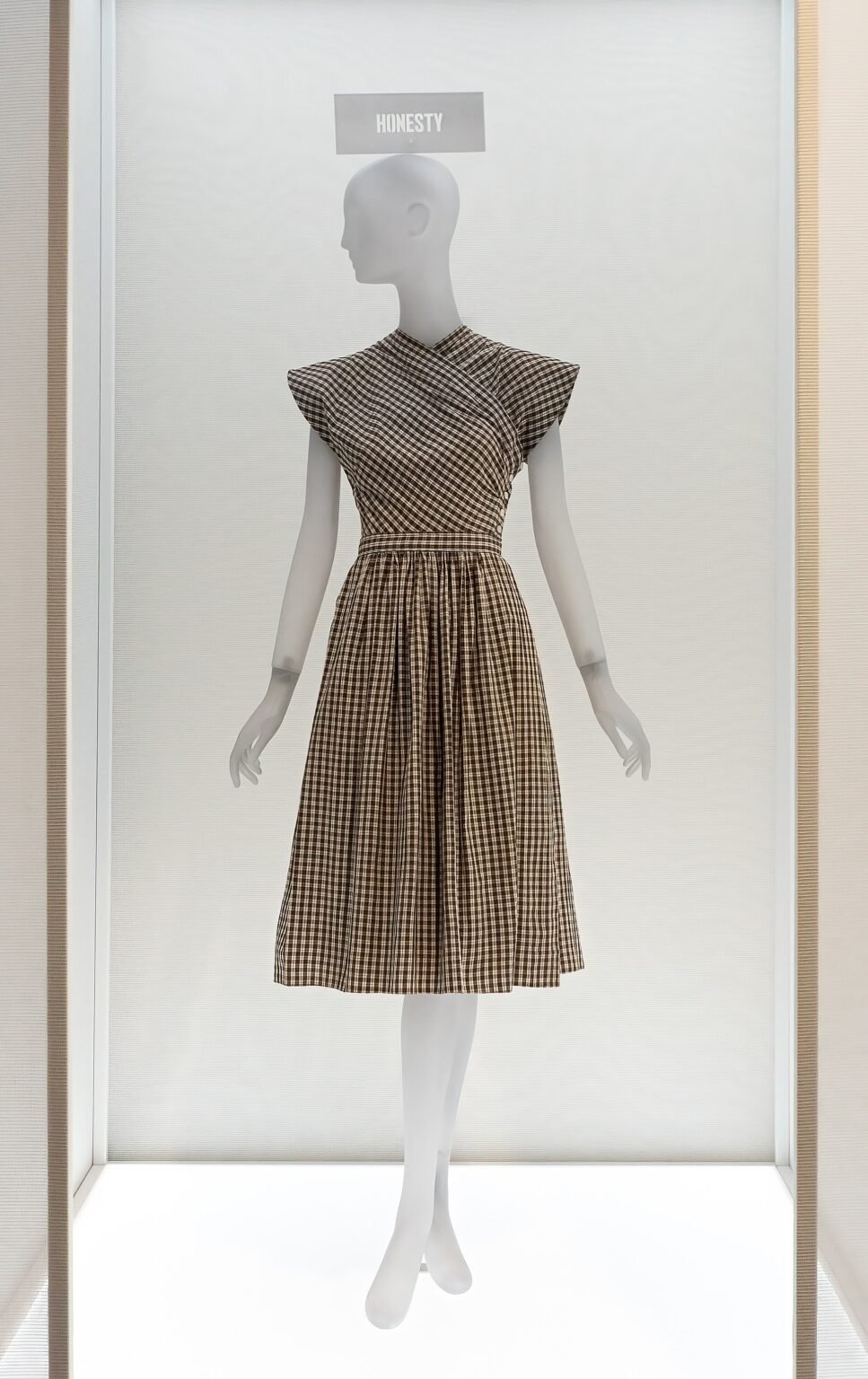
Photo: “Claire McCardell dress at the Met (52691)” by Rhododendrites, CC BY-SA 4.0, via Wikimedia Commons.
Editor’s note: facts in this article were checked against the linked sources in November 2026. The Harper’s Bazaar origin of the Popover and the list of innovations are from the National Women’s History Museum and are attributed to it. The mitt, the Garment District production, the “over 50,000” figure, the bias cut, front fastenings, Capezio and Julie Eilber’s remarks are from The New York Historical’s interview page for Rationing Fashion; the installation’s dates are not given there, so the article does not say it is currently on view. The $19.95 Lord & Taylor price comes from a 1952 advertisement described by the Maryland Center for History and Culture. The versatility line, wartime fabrics and Lord & Taylor’s marketing are from WWD (2010). Biography, the Paris school, Robert Turk, the Monastic Dress, Hattie Carnegie, Townley’s labels, the Time cover and her death are from Wikipedia; her age at death is calculated from those dates. The Walk of Fame wording is from the BID’s archived page. The featured image is a museum display photographed in 2022.