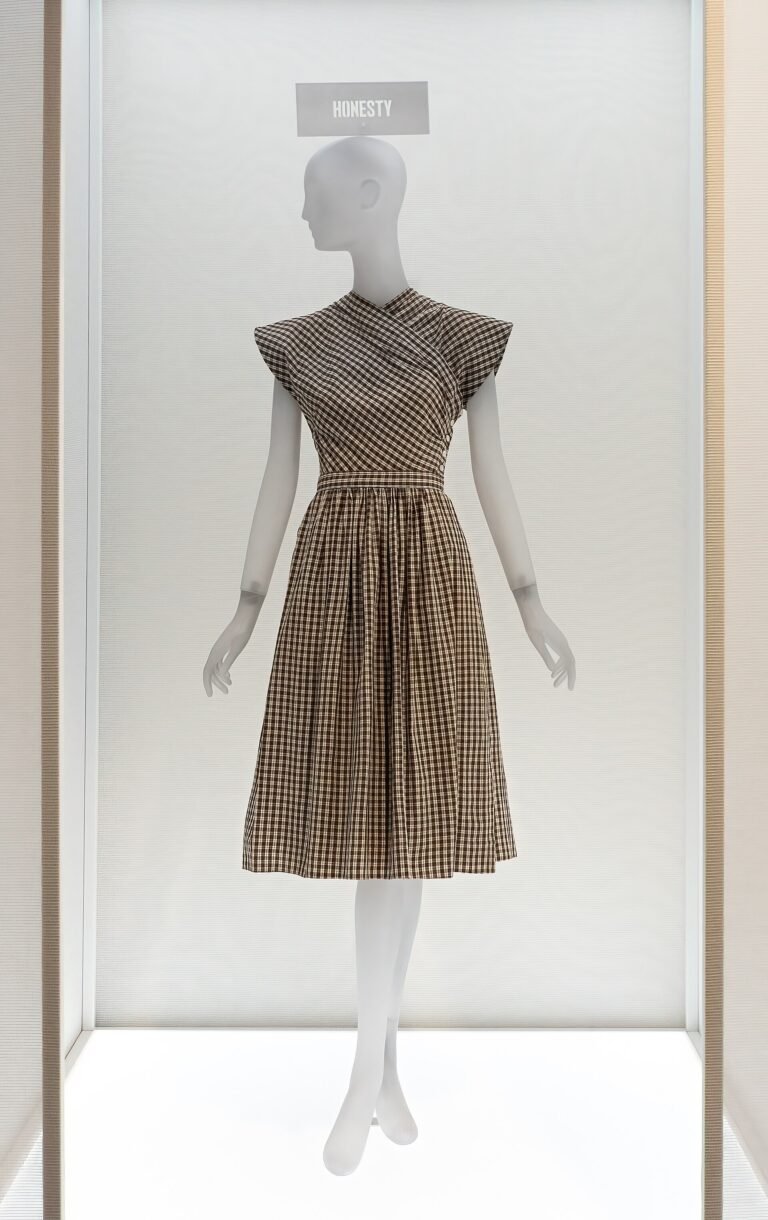
Every fall, Lincoln Center’s plaza rolls out a red carpet for a ballet. The occasion is New York City Ballet’s Fall Fashion Gala, a night when fashion designers make costumes for new works danced on the stage of the David H. Koch Theater. It can look like a modern idea. In fact it is the latest chapter of a story that began in Paris more than a century ago, when a ballet company decided that painters and couturiers belonged backstage.
Diaghilev’s Paris laboratory
The Ballets Russes, founded by the impresario Sergei Diaghilev, presented its first Paris season of ballet in 1909 and performed until his death in 1929. It never danced in Russia. It is widely regarded as the most influential ballet company of the 20th century, in large part because Diaghilev commissioned new work from artists who were not trained for the theater at all.
The list of designers reads like a museum catalog: Léon Bakst, Alexandre Benois, Natalia Goncharova, Pablo Picasso, Henri Matisse, Joan Miró, Giorgio de Chirico, Coco Chanel and more. Bakst, who designed for the company from 1909 to 1921, dressed productions such as Scheherazade and The Firebird. The line between stage and salon was already thin. For Nijinsky’s tennis ballet Jeux in 1913, the V&A notes, Bakst worked with the Paris fashion house of Paquin, for which he also designed dresses.
Costume could also be provocative. The Rite of Spring, with costumes and sets by Nicholas Roerich, caused a sensation at its premiere at the Théâtre des Champs-Élysées on May 29, 1913, and the uproar has been partly attributed to its costumes. Four years later Picasso designed Cubist costumes for Parade at the Théâtre du Châtelet. Some were made of solid cardboard, which left the dancers very little room to move.
Chanel’s bathing suits
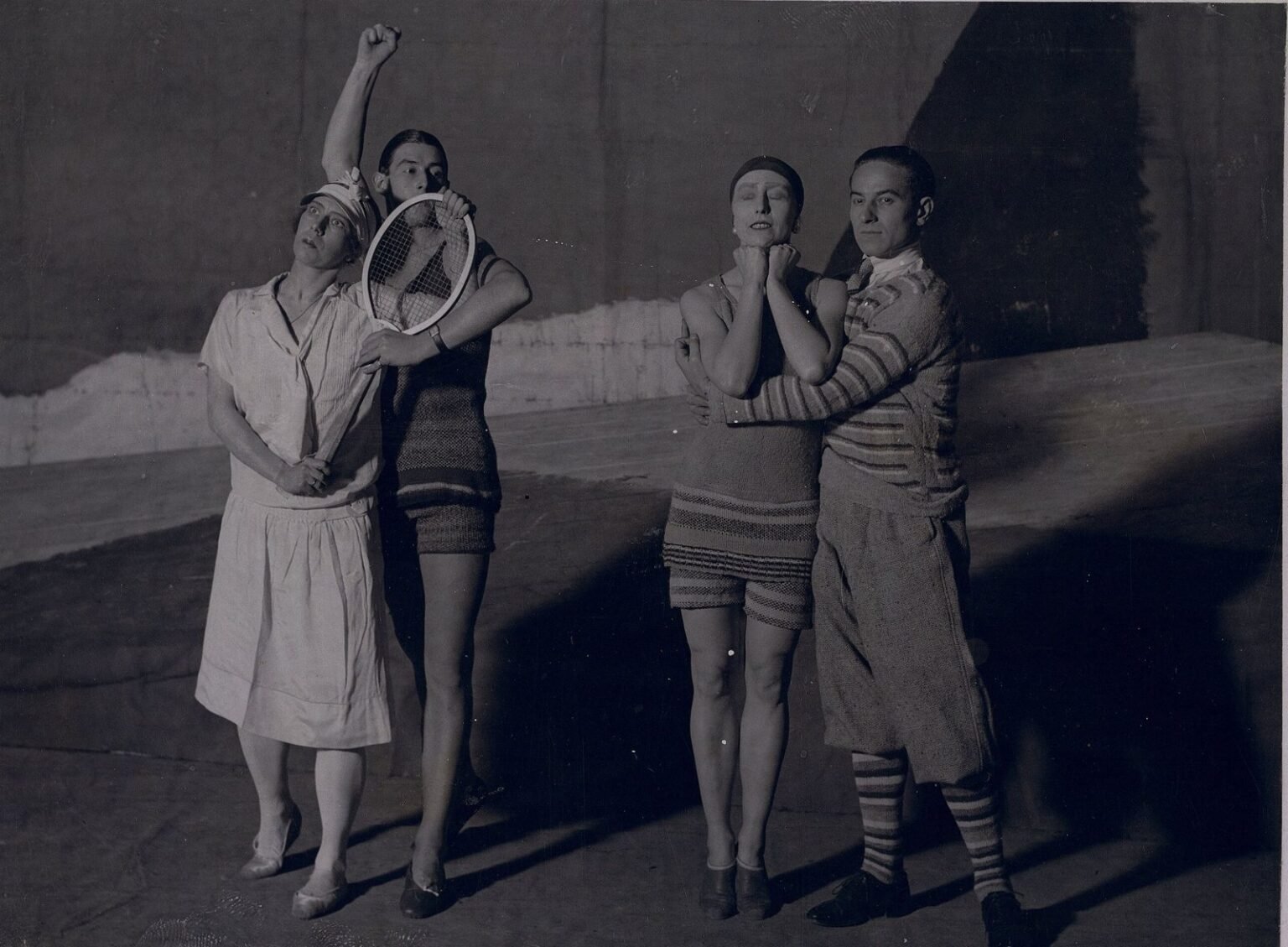
The clearest meeting of fashion and ballet came in 1924. Le Train Bleu, choreographed by Bronislava Nijinska to music by Darius Milhaud and a scenario by Jean Cocteau, opened at the Théâtre des Champs-Élysées on June 20. It was named after the luxury night train to the Mediterranean, and it was set on a fashionable beach among swimmers, tennis players and golfers. Henri Laurens designed the set, the curtain was painted after a Picasso, and Chanel dressed the cast in sportswear.
The V&A, which holds costumes from the production, describes them as deliberately up to date. Lydia Sokolova, as the bathing belle La Perlouse, wore a cyclamen-pink, hand-knitted one-piece bathing costume. The principal swimmers’ costumes were knitted by hand, while the chorus wore machine-knitted ones. According to the museum, Le Train Bleu was the only Diaghilev ballet for which Chanel designed all the costumes.
The clothes were also hard to dance in. Sokolova’s autobiography, quoted by the V&A, recalls that her woolen costume was impossible to grip when her partner had to throw her into the air and catch her, and that the rubber bathing slippers she chose were very uncomfortable for dancing. The little suede cap made for her, she wrote, set a fashion.
From Paris to New York
One young dancer connects the Ballets Russes to Lincoln Center. George Balanchine, trained at the Imperial ballet school in St. Petersburg, was invited by Diaghilev to join the company in 1924. In 1933 he met Lincoln Kirstein in London, and Kirstein invited him to America to start a school. After years of false starts, the two formed Ballet Society, which became New York City Ballet in 1948 at New York City Center.
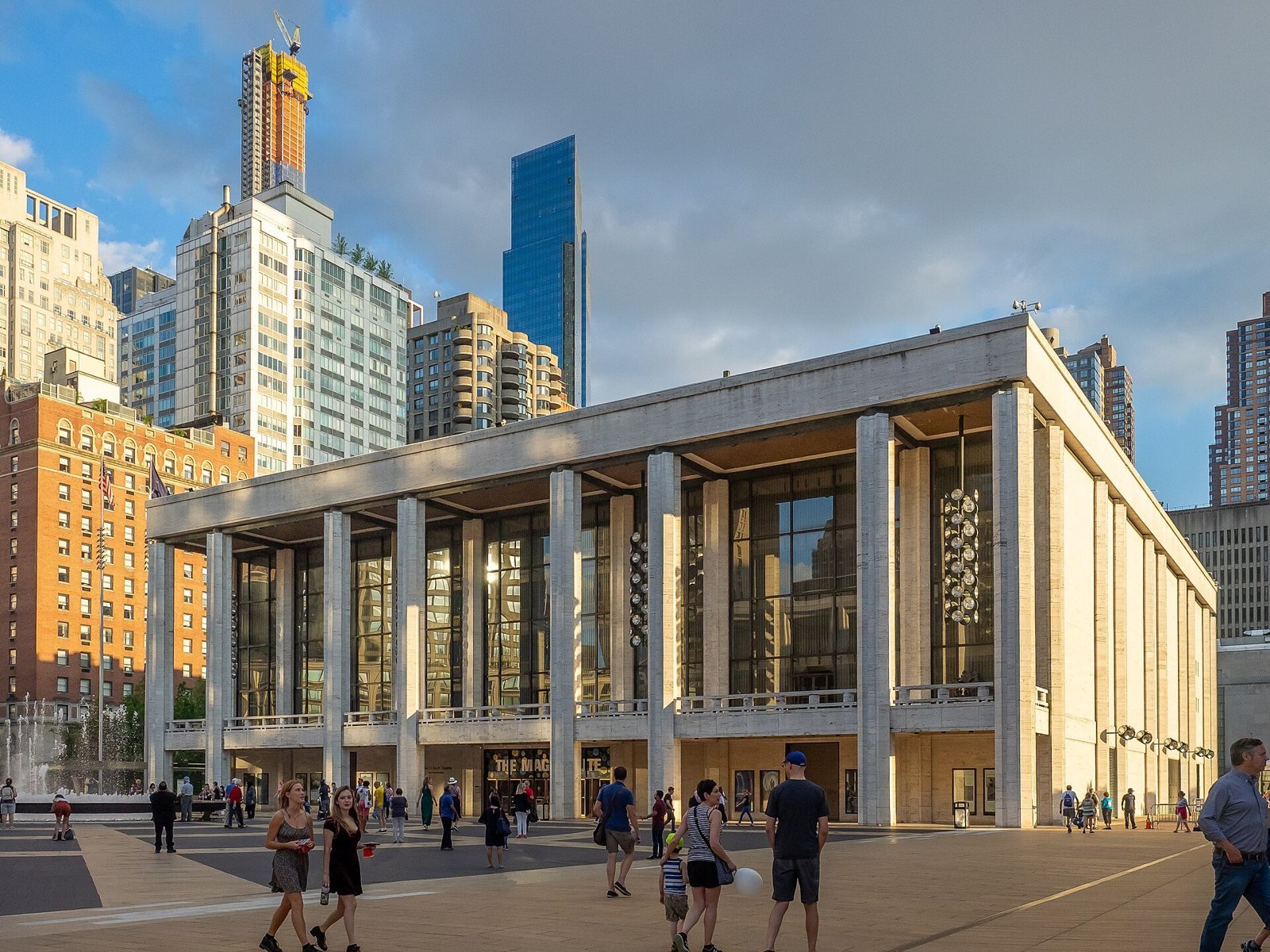
On April 24, 1964, the company opened the New York State Theater at Lincoln Center, now the David H. Koch Theater, designed by Philip Johnson. It has been the company’s home ever since. NYCB also has its own permanent costume shop, which the company describes as part couture house and part textile museum.
The fashion gala
NYCB credits the actor and board vice chair Sarah Jessica Parker with conceiving the Fall Fashion Gala, which first took place in 2012. For that inaugural evening, according to CNN, Valentino Garavani designed costumes for three works, including Bal de Couture, a ballet Peter Martins choreographed in his honor. Marc Happel, the company’s director of costumes since 2006, has since worked with more than 30 designers for the gala, CNN reported in 2023.
The 2026 gala, the 14th, took place on October 1. It opened with Alysa Pires’s Auspicy in costumes by Viktor&Rolf, followed by Justin Peck’s pas de deux Mirror/Sky with streamlined costumes by Simone Rocha. Jennifer Archibald’s Shared Rain, her first work for the company, closed the program with eight dancers in designs by Robert Wun.
Why dance is the hardest brief
A runway look only has to walk. A ballet costume has to survive lifts, turns and partnering, night after night. Happel described the test to CNN: “During a fitting, we will ask the dancers to move and try steps from the actual choreography to make sure the costume is moving the way it should, and not restricting the dancer in any way.”
The examples are instructive. For the 2015 gala, CNN reported, Marques’Almeida’s ties and loose pieces of fabric kept wrapping around the dancers’ arms and legs, so they had to be shortened or removed. It is the same lesson Sokolova learned in Chanel’s wool, and that Picasso’s dancers learned in cardboard. On stage, the body always wins.
Read on: how New York’s theater designers solve the same problems in Curtain Up: Inside the Art of Broadway Costume Design, what the couture tradition behind these commissions means in What Haute Couture Really Means, and where the craft can take you in Fashion Careers Beyond the Designer.
Find talent in the MOAM directory · Subscribe to The MOAM List · Follow MOAM on Instagram @moam_co and Facebook makingofamogul · Tips and corrections: hello@makingofamogul.com
Sources
- V&A, “Costume for La Perlouse in Le Train Bleu,” Coco Chanel, 1924
- V&A, “Costume for a Gigolo in Le Train Bleu,” Coco Chanel, 1924
- V&A, “Le Train Bleu,” stage photograph by Sasha, 1924 (Jeux, Bakst and Paquin)
- New York City Ballet, “Our History”
- New York City Ballet, “The Costumes”
- New York City Ballet, “2026 Fall Fashion Gala” (Oct 8, 2026)
- New York City Ballet, Fall Fashion Gala program, Oct 1, 2026
- CNN, “An iconic collaboration between the worlds of high fashion and dance” (Dec 7, 2023)
- Wikipedia, “Ballets Russes” (secondary; dates, designers, Bakst productions)
- Wikipedia, “The Rite of Spring” (secondary; 1913 premiere, Roerich)
- Wikipedia, “Parade (ballet)” (secondary; 1917 premiere, cardboard costumes)
- Wikipedia, “Le Train Bleu (ballet)” (secondary; premiere, creative team)
- Wikipedia, “New York City Ballet” (secondary; Philip Johnson design)
Photo: “Le train bleu – Bronislava Nijinska, Anton Dolin, Lydia Sokolova, Léon Woizikovski – btv1b52001343f” by Continental Press Photo Service (Bibliothèque nationale de France), Public domain, via Wikimedia Commons. Cropped from the archival mount. Photo: “David H Koch Theater (48269670522)” by Ajay Suresh, CC BY 2.0, via Wikimedia Commons.
Editor’s note: facts in this article were checked against the linked sources in October 2026. Lydia Sokolova’s recollections are paraphrased from her autobiography as quoted by the V&A, and Marc Happel’s words are quoted as published by CNN. The featured photograph is a 1924 press photograph held by the Bibliothèque nationale de France, shown cropped from its archival mount.