On December 12, Paris’s fashion museum will open a show about the work that happens before a garment ever meets a body. En volume ! Donner corps à la mode runs at the Palais Galliera through October 17, 2027. Under the general curatorship of Émilie Hammen, the museum’s director, and the scientific curatorship of Marie-Laure Gutton, head of the accessories collections, and Samy Jelil, assistant curator, working with the conservation team as a whole, it gathers more than 300 rarely shown works — garments, accessories, photographs, graphic arts and tools — from the seventeenth century to the present.
The title is a brief. To give fashion a body, in this telling, is not only to put clothes on a mannequin. It is to show how volume is cut, shaped and held, and how those techniques have had to answer bodies that change, differ and refuse a single standard.
Tailoring, flou and knit
The route is organized around three techniques: tailoring (le tailleur), flou and knit (la maille). Each, the museum argues, is a different way of making volume, of shaping a silhouette and of adapting to the varied morphologies of women, men and children across time. The selection draws on the Galliera’s own collections and on loans from historic houses as well as from younger designers. Visitors are meant to follow a garment from the preparatory drawing to the finished piece, and to look as carefully at hats, gloves and shoes as at the clothes themselves, at how those accessories are made and how they fit the body.
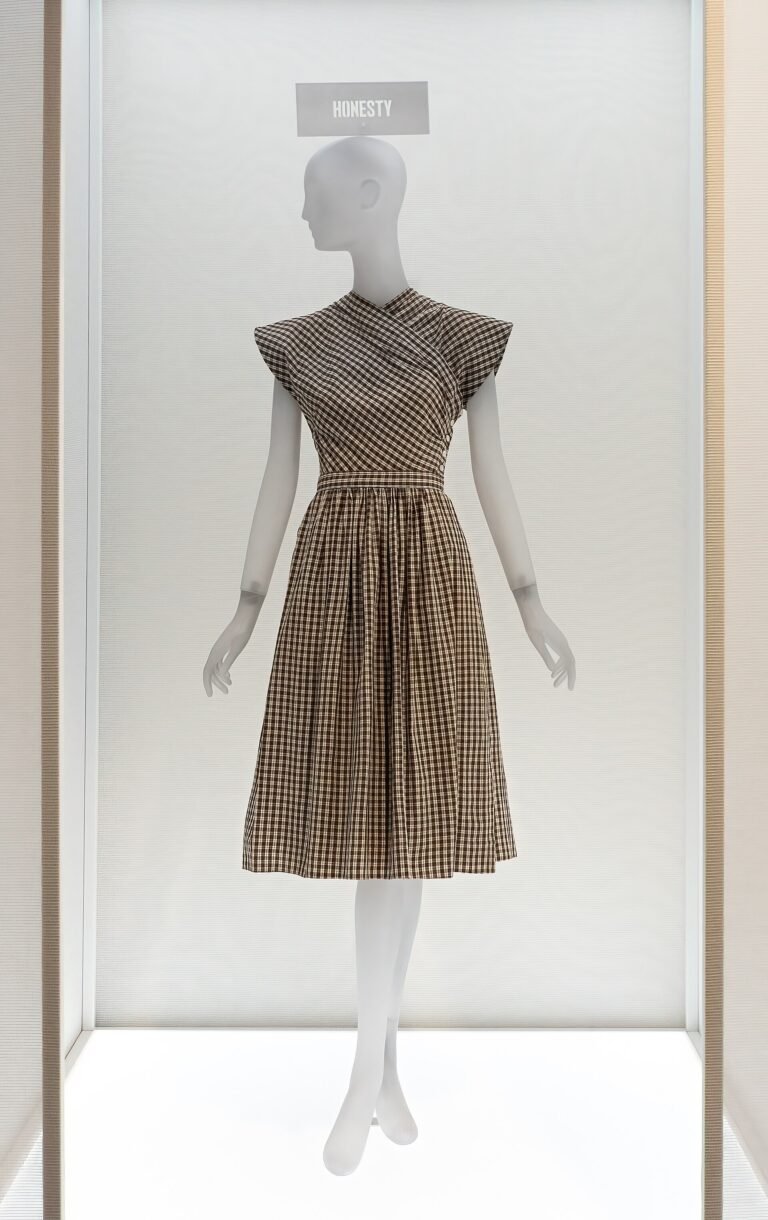
The official examples already sketch the range. A structured nineteenth-century man’s redingote stands for the tailor’s art; the virtuosity of a drape by Madame Grès stands for flou; a Second Empire crinoline shows volume built out from the body; a soft, functional knit ensemble by Sonia Rykiel shows what maille can do when it is asked to move. Installation images on the museum’s page give that list a more specific wardrobe: Jacques Heim’s “Actualité” cocktail dress of spring-summer 1952; a Grès cocktail dress from the haute couture of spring-summer 1961, also shown in dialogue with an Issey Miyake tunic and skirt of spring-summer 1992; Sonia Rykiel’s “Aviateur” ensemble from the ready-to-wear of spring-summer 1981; and a jacket and skirt by Noir Kei Ninomiya, ready-to-wear, spring-summer 2020.
What is usually hidden
Much of the exhibition’s force is meant to come from what is ordinarily kept in the workroom. Patterns, toiles and prototypes are brought into the galleries. Some garments are shown opened out and laid flat, so that a construction usually worn closed can be read as a diagram. The museum’s installation photographs also include Maison Margiela’s “Buste Stockman” jacket — dated to spring-summer 1997 in the Paris Musées collections catalogue — presented with a sleeveless Yves Saint Laurent jacket prototype. A dress form turned into a garment is an almost too-perfect emblem for a show about giving clothes a body.
Behind those objects is a longer social history. Made-to-measure clothing, the museum notes, was the norm until the beginning of the nineteenth century. The rise of ready-to-wear, more accessible and more easily reproduced, encouraged simpler cuts and the gradual standardization of sizes. En volume ! treats that shift as an open question: how does a garment adapt to bodies that fall outside the thinness the industry has often assumed, to disabled bodies, or to bodies that change over a life, including those of pregnant women and children? The clothes are not asked only to impress. They are asked to fit.
A Paris laboratory, and a digital wardrobe
The museum is also interested in invention at the edges of the atelier. Traditional savoir-faire is set beside digital tools and 3D processes, part of a larger claim that Paris has been, and remains, “a fascinating laboratory of silhouettes,” from earlier centuries to now. Invited to work with the collections through artificial intelligence, the artist Pierre Giner contributes an interactive project that treats the Galliera’s holdings as a giant wardrobe. In the museum’s account, garments take on bodies again, periods mix, and narratives are recomposed. Like a stylist ignoring chronology, Giner uses AI simulations to imagine new silhouettes, and, the museum says, to embody a diversity of bodies and morphologies. That is the institution’s description of the work, not a review of it; the piece will have to be seen once the rooms are open.
The timing is fortunate for visitors already in the building. Un vestiaire à soi. Féminités dissidentes au 19e siècle, on view through February 14, 2027, looks at how women in the nineteenth century took up the masculine dress codes of their time. The two exhibitions share a subject — how clothes make, and unmake, a body’s public form — and the museum is offering a coupled ticket.
Plan your visit
En volume ! opens on December 12, 2026, and remains on view through October 17, 2027, at the Palais Galliera, 10, avenue Pierre 1er de Serbie, 75116 Paris. The museum is open Tuesday through Sunday from 10 a.m. to 6 p.m., closed Mondays, with late openings on Fridays until 9 p.m. Announced prices are €14, or €12 reduced, for a single ticket; a coupled ticket with Un vestiaire à soi is €17, or €15 reduced; admission is free for visitors under 18. When this article was checked in mid-November 2026, the museum still listed ticketing as coming soon. Confirm prices, reservations and hours on the official exhibition page or through Paris Musées before you go. The nearest Métro stops are Iéna and Alma-Marceau on line 9; the RER C stop is Pont de l’Alma.
Read on: another current argument about the dressed body in The Body as a Museum, and a Paris season already in motion in Anthony Vaccarello Leaves Saint Laurent.
Find talent in the MOAM directory · Subscribe to The MOAM List · Follow MOAM on Instagram @moam_co and Facebook makingofamogul · Tips and corrections: hello@makingofamogul.com
Sources
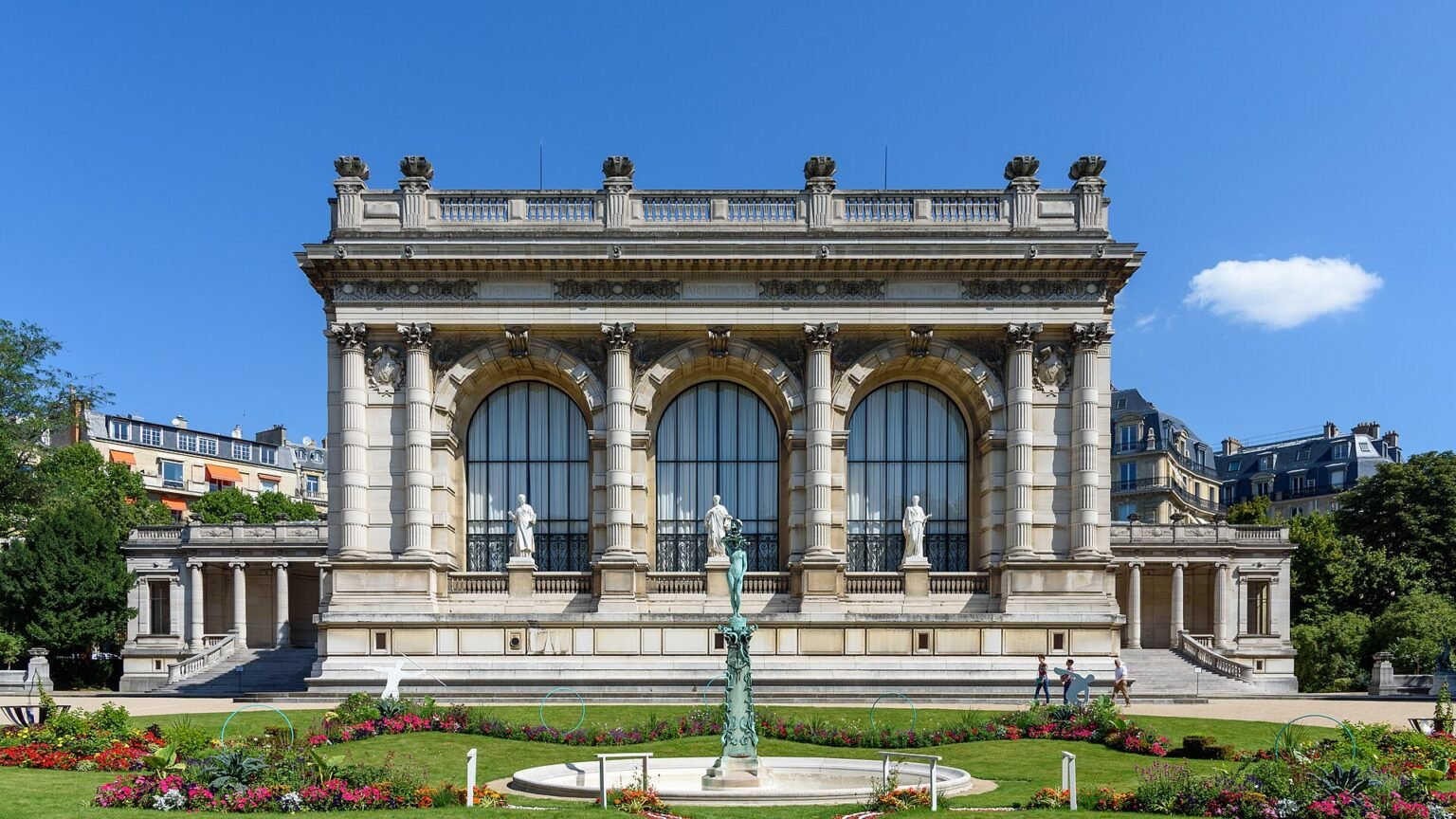
Photo: “Musée Galliera, Paris 21 July 2017” by Joe deSousa, CC0 1.0, Public domain, via Wikimedia Commons.
Editor’s note: facts in this article were checked against the linked sources in November 2026. Dates, the object count, the curatorial credits, the three technical axes, the official examples (the nineteenth-century redingote, Madame Grès, the Second Empire crinoline, Sonia Rykiel), the discussion of patterns, toiles, prototypes and garments shown opened out, the account of ready-to-wear and size standardization, the description of Pierre Giner’s project, the announced hours and ticket prices, and the “ticketing coming soon” notice all come from the Palais Galliera exhibition page and the corresponding Paris Musées listing. Named garments in the installation photographs (Heim, Grès, Miyake, Rykiel, Noir Kei Ninomiya) are taken from the museum’s own captions. The museum caption that groups Margiela’s “Buste Stockman” jacket with an Yves Saint Laurent sleeveless jacket prototype lists the dates spring-summer 1971 and spring-summer 1997 without clearly assigning each year to a garment; this article dates the Stockman jacket to spring-summer 1997 on the basis of the Paris Musées collections catalogue and does not assign a year to the YSL prototype. Pierre Giner’s AI installation is described only in the museum’s words, not reviewed. When this draft was checked, individual tickets had been priced but online booking was still listed as forthcoming; prices, hours and the coupled-ticket offer with Un vestiaire à soi should be reconfirmed before any visit notice is published. The featured photograph shows the palais’s south façade and garden in July 2017, not the En volume ! galleries.