
Paris gets the headlines, but some of Europe’s most practical support for young designers is built elsewhere. London pays bursaries and lends its stage. Milan gives cash and mentoring to keep production in Italy. Copenhagen rewrote the rules of admission entirely. For a New York designer weighing where to show, or just trying to understand what good support looks like, these three systems are worth studying side by side.
London: NEWGEN and the long runway
The British Fashion Council’s NEWGEN is open to ready-to-wear and accessories designers. A panel chaired by Sarah Mower MBE selects recipients, and they can stay in the program for up to three years, reapplying each year. Recipients get a bursary, mentoring, pro-bono legal counsel and showcasing support at London Fashion Week, held in February and September. For designers showing in the BFC hub, the Council values that support at about £80,000 per designer in kind: waived listing fees, a show producer and crew, lighting, sound, seating and venue space.
The 2026/27 class has sixteen names. Two of them have already shown up in the international prize lists: Steve O Smith won the LVMH Prize’s Karl Lagerfeld Prize in 2025, and Pauline Dujancourt took ANDAM’s special prize in 2026. NEWGEN designers are also invited to the BFC’s seasonal showroom in Paris, so London becomes a way into Paris as well.
There is a less obvious detail too: the BFC has adopted Copenhagen’s sustainability framework as a mandatory requirement for NEWGEN, and applicants respond to 18 statements on it.
Milan: keeping it made in Italy
The Camera Moda Fashion Trust, a nonprofit set up in 2017 and linked to Italy’s fashion chamber, the Camera Nazionale della Moda Italiana, gave three grants of €70,000 each in 2026. They went to Act N°1, Institution by Galib Gassanoff and Materia, chosen from eleven finalists and 80 applicants, and come with business mentoring and one-to-one tutoring. Since its founding, the Trust says it has given more than €1.45 million to 35 designers.
The eligibility rules spell out what the program is for. Applicants must be registered companies in business for more than two years, majority-owned by the designers and based in Italy, with at least 80 percent of production carried out in Italy. Bridal, swimwear and childrenswear are excluded.
Milan’s diversity work deserves attention too. In 2020, designers Stella Jean and Edward Buchanan and Afro Fashion Association founder Michelle Francine Ngonmo started We Are Made in Italy (WAMI), a collective that mentors and shows BIPOC designers working in Italy during Milan Fashion Week. Ngonmo also sat on the 2026 Fashion Trust jury.
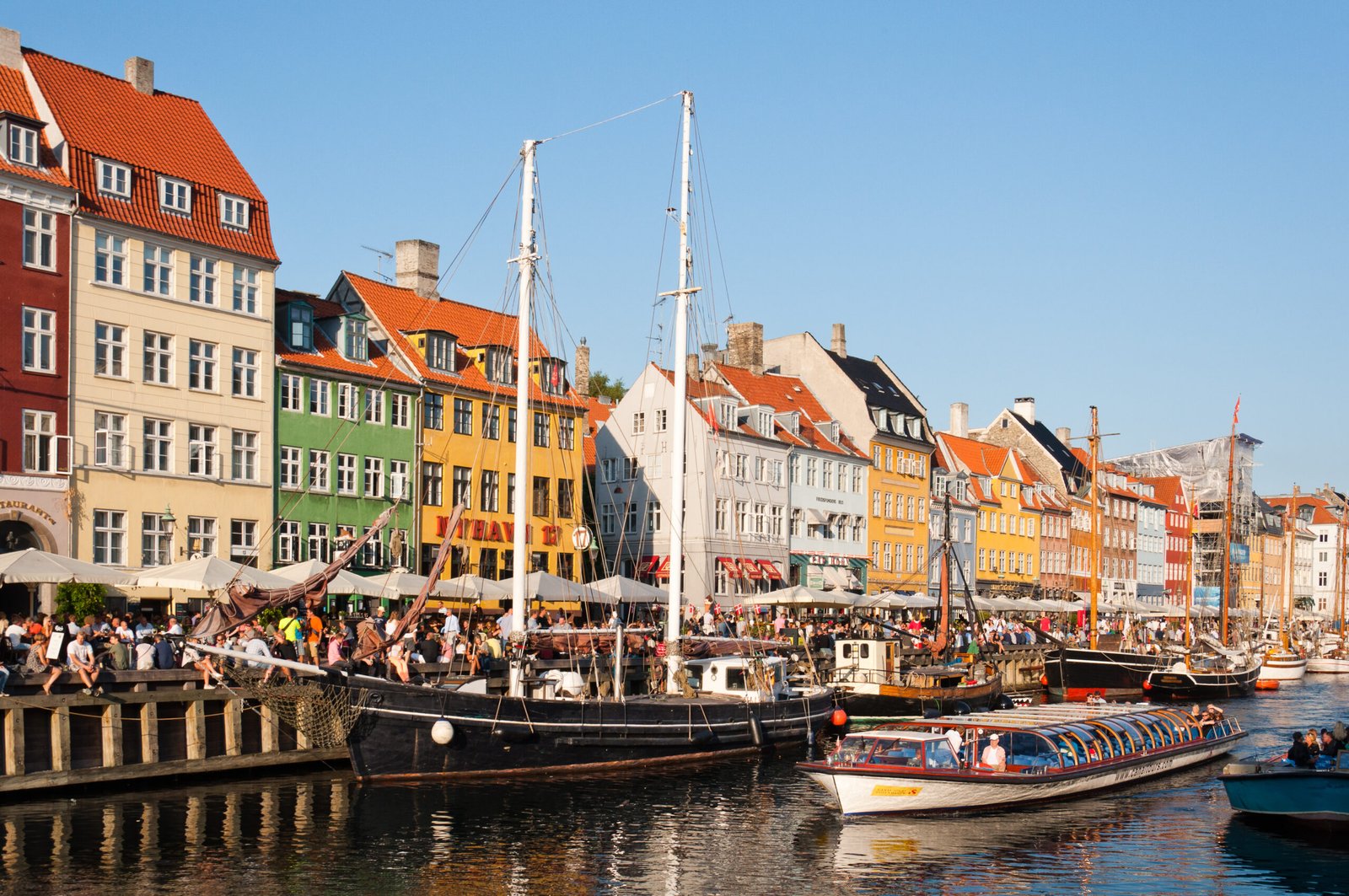
Copenhagen: admission by standard
Since January 2023, any brand applying to Copenhagen Fashion Week’s official show schedule has had to document compliance with a set of Minimum Standards. There are now 19, across six areas: strategic direction, design, materials, working conditions, consumer engagement and show production. New brands have one full calendar year, or two seasons, to comply. The four show standards, numbers 16 to 19, are specific. Shows may not use single-use props, and rentals are preferred. Backstage must be free of single-use plastic packaging, with waste sorted to Danish rules. Brands must support the week’s emission-reduction and “insetting” work, and they must sign the Danish Fashion Ethical Charter. The week says it runs backstage checks to enforce them.
The framework is evolving rather than fixed. For SS27, the week said it would not enforce Standards 6 and 7, which cover a preferred-materials list and a share of certified, preferred or deadstock materials, while it develops revised versions.
For young Nordic labels, the week runs CPHFW NEWTALENT, presented by Pandora. It supports three to five brands each season, all less than five years in business, for three consecutive seasons, with money, mentoring, a place on the official schedule and a showroom. Current names include Stem, Studio Constance and Anne Sofie Madsen.
What New York can take from this
Each city has decided what it wants more of and built support around that goal. London wants businesses that last, Milan wants Italian production, and Copenhagen wants accountability. New York’s own programs are strong, but the lesson for independents is simpler. Before you apply anywhere, read the eligibility rules as a description of what that platform values, and decide whether your business fits it.
Subscribe to The MOAM List for application windows across the fashion capitals.
Editor’s note: facts in this article were checked against the linked sources in October 2026. Details such as dates and deadlines can change, so confirm with the organizers before you plan.
Photo credits: “Galleria Vittorio Emanuele II, Milan, interior” by Gerda Arendt, via Wikimedia Commons, CC0 (http://creativecommons.org/publicdomain/zero/1.0/deed.en); “London Fashion Week 2 (27487328226)” by Julian Stallabrass from London, UK, via Wikimedia Commons, CC BY 2.0 (https://creativecommons.org/licenses/by/2.0); “Nyhavn Copenhagen 2014 10” by Julian Herzog (Website), via Wikimedia Commons, CC BY 4.0 (https://creativecommons.org/licenses/by/4.0)
Leave a Reply