
Every first Monday in May, the steps of the Metropolitan Museum of Art become the most photographed staircase in fashion. It is easy to forget what the evening is for. The Met Gala exists to fund a curatorial department, the Costume Institute, whose real work happens year-round in storerooms, conservation labs and galleries. Its story begins far from the red carpet, in a downtown theater.
A theater collection with bigger ambitions
The Costume Institute started life as the Museum of Costume Art, an independent institution founded in 1937. According to the Met’s own archives, it was established by Irene Lewisohn, founder of the Neighborhood Playhouse on the Lower East Side, and its first holdings were the historic and regional costumes she had gathered to make the Playhouse’s productions look authentic.
Its ambitions were broad from the start. The museum’s statement of purpose, preserved in the Met Archives, promised dress and accessories “of all epochs and all people, which may serve industrialists, artists, art historians, craftsmen, and students of all kind.” That phrase matters. From day one this was meant as a working library for the people who make clothes, not only a cabinet of curiosities. Its early board mixed theater people with industry figures, including Lord & Taylor president Dorothy Shaver and the publicist Eleanor Lambert, who would later found the CFDA.
The war that moved fashion’s center of gravity
The Second World War turned that idea into a strategy. As the Met Archives put it, during the war the museum’s exhibitions highlighted American design and wartime issues such as rationing, “as fashion hegemony shifted away from its traditional European centers and towards Seventh Avenue.” In 1942 its exhibition “Renaissance in Fashion 1942” was staged at the Metropolitan Museum itself.
In December 1944 the Met announced a merger with the Museum of Costume Art. It took effect in 1946, paid for with the fashion industry’s support, and the collection became The Costume Institute. Its first show in its new home opened in December 1946 as part of the Met’s 75th anniversary. In 1959 it became a full curatorial department, which put clothing on the same institutional footing as paintings, arms and armor or Egyptian art.
Vreeland, Brooklyn and a new name
The department’s public profile changed in the 1970s. The Met credits Diana Vreeland, special consultant from 1972 until her death in 1989, with a run of exhibitions that set the standard for costume shows worldwide, among them The World of Balenciaga (1973), The Glory of Russian Costume (1976) and Vanity Fair (1977).
Two later moves reshaped the collection and its home. In January 2009 the Brooklyn Museum transferred its costume collection, built over more than a century, to the Met, where it is known as the Brooklyn Museum Costume Collection at The Metropolitan Museum of Art. In May 2014, after a four-year renovation, the galleries reopened as the Anna Wintour Costume Center.
Why the gala matters
The Met is explicit about the money. In its February 23, 2026 announcement, the museum said the Met Gala takes place annually on the first Monday in May and that its proceeds give the Costume Institute its primary source of annual funding for exhibitions, publications, acquisitions and operations. The funds also support other museum activities. The 2026 gala took place on May 4, with the dress code “Fashion is Art.”
So the spectacle has a purpose. The celebrity arrivals pay for conservation, research and the acquisitions that let a future curator tell the story of this decade’s clothes.
What is on view now
This year the department moved into new space. Costume Art opened on May 10, 2026 and runs through January 10, 2027. It inaugurates the Condé M. Nast Galleries, nearly 12,000 square feet next to the Great Hall, which will host the Costume Institute’s spring shows and, at times, exhibitions from other departments. The galleries and the show were designed by the Brooklyn architecture firm Peterson Rich Office.
According to the Met, the exhibition looks at “the centrality of the dressed body,” pairing garments from the Costume Institute with artworks from across the museum’s collection. The Met’s exhibition page lists it as free with museum admission.
How to use it if you work in fashion
- Go more than once. A show built on pairings of garments and artworks rewards slow looking. Sketch silhouettes and construction details, not just the headline pieces.
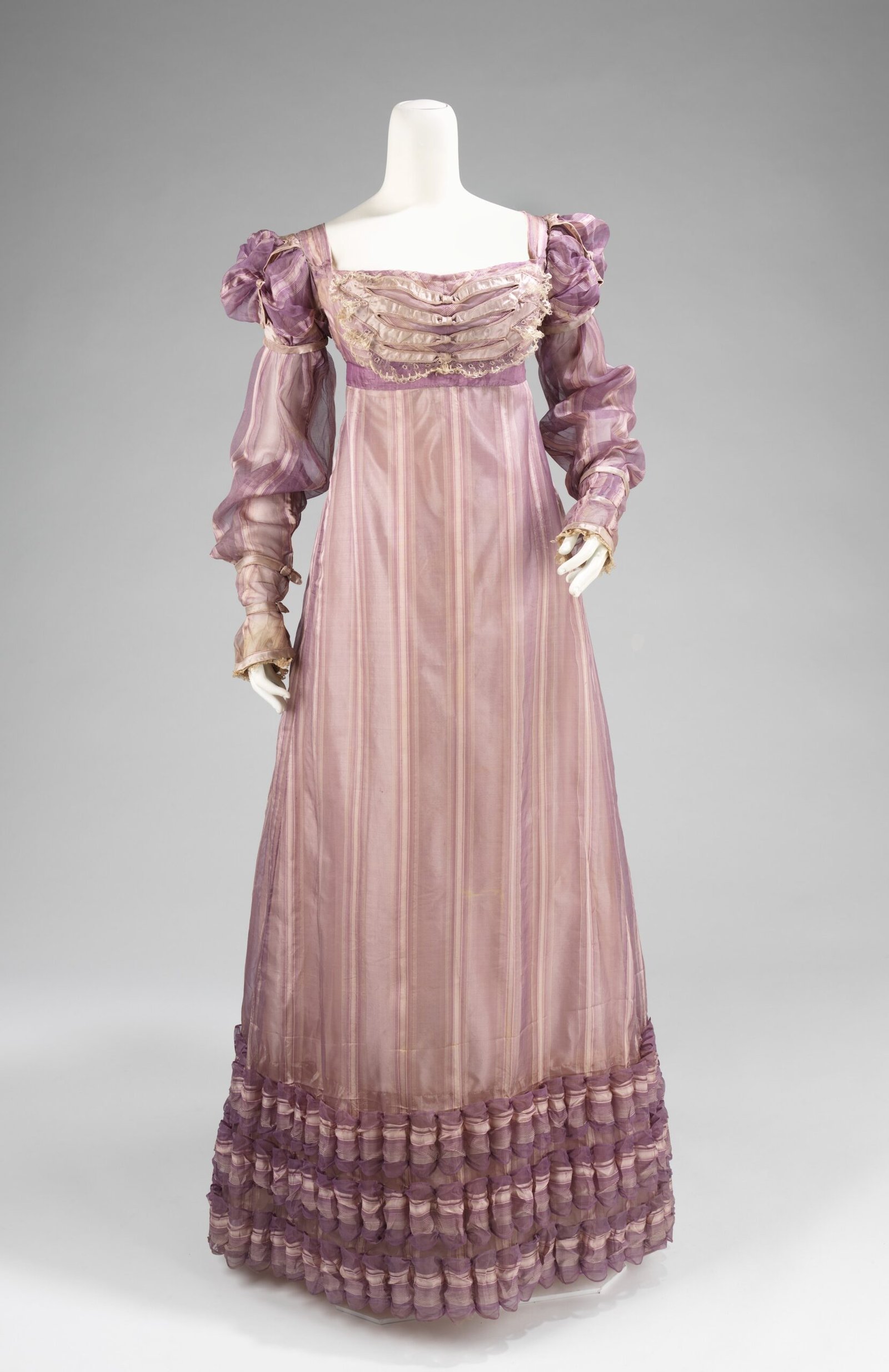
- Use the collection online. The Met publishes many Costume Institute objects through its open-access program. Our featured image, an American ball gown from about 1820 in the Brooklyn Museum Costume Collection at the Met, is one of them.
- Read the history as a business lesson. The Costume Institute exists because New York’s garment industry paid to bring it inside the Met in the 1940s. Culture and commerce were never separate here.
For more on the building blocks of New York fashion, read our guides to the Garment District and the Museum at FIT.
Find talent in the MOAM directory · Subscribe to The MOAM List · Follow MOAM on Instagram @moam_co and Facebook makingofamogul · Tips and corrections: hello@makingofamogul.com
Sources
- The Metropolitan Museum of Art Archives, Costume Institute Records, 1937-2008 (finding aid, historical note)
- Watson Library catalog record, Costume Institute Records (2009 Brooklyn transfer; 2014 reopening)
- The Met, The Costume Institute (department history)
- The Met, press release: Spring 2026 Costume Institute Show and New Galleries (Feb 23, 2026)
- The Met, Costume Art exhibition page
- The Met, “Dress Rehearsal: The Origins of the Costume Institute”
Photo credits: “Ball Gown ca. 1820 – American” by The Metropolitan Museum of Art (Brooklyn Museum Costume Collection), via Wikimedia Commons, CC0 (https://creativecommons.org/publicdomain/zero/1.0/deed.en)
Editor’s note: facts in this article were checked against the linked sources in October 2026. Exhibition dates (Costume Art, May 10, 2026 to January 10, 2027) and admission terms come from the Met’s February 23, 2026 press release and exhibition page. Confirm current details with the museum before you visit.
Leave a Reply