New York, New York · Part 4 · Fashion
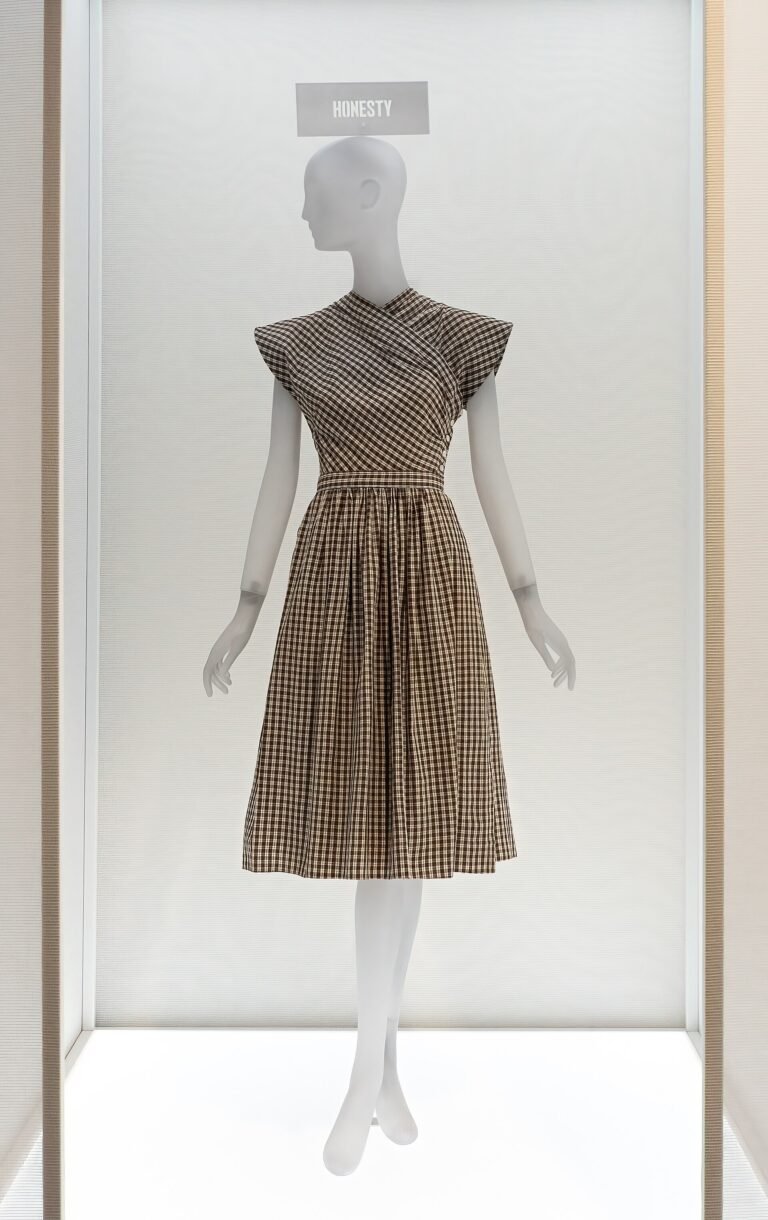
For the fall of 1983, Willi Smith did not send his WilliWear collection down a hotel runway. He called it Street Couture and showed it at the Puck Building, with video art by Juan Downey, music by Jorge Socarras and makeup by Linda Mason. (Wikipedia) A few months earlier, for spring, a collection called City Island had come with video art by Nam June Paik. The clothes were loose, made in natural fabrics and sold at affordable prices; the presentations belonged to the downtown art world. Smith saw no reason to choose.
Cooper Hewitt, which gave him a full retrospective in 2020, describes him as a pioneer of “street couture,” fashion inspired by the creativity of people from the cities to the suburbs, and as the most commercially successful Black American designer of the twentieth century at the time of his death. (Cooper Hewitt)
Philadelphia, Parsons, Seventh Avenue
Willi Donnell Smith was born on February 29, 1948, in Philadelphia, to Willie Lee Smith, an ironworker, and June Eileen Smith, an artist and homemaker. He studied commercial art at Mastbaum Technical High School and took a fashion illustration class at the Philadelphia Museum College of Art. (Cooper Hewitt) In 1965 he left for Parsons School of Design in New York, arriving with two scholarships and an apprenticeship with the designer Arnold Scaasi. (Cooper Hewitt; Cooper Hewitt)
He left Parsons and found his circle fast. He met the artists Christo and Jeanne-Claude, who became collaborators, and Bethann Hardison, who became his fit model and friend. At the junior sportswear label Digits he became lead designer and earned the first of several Coty American Fashion Critics’ Award nominations. (Cooper Hewitt)
WilliWear
In 1976, Smith and Laurie Mallet, whom he had hired as his design assistant at Digits, traveled to Bombay to produce a small collection of separates in natural fibers. It sold, and the two formed WilliWear Ltd., with Mallet as president and Smith as vice president and lead designer. (Wikipedia; Cooper Hewitt) The first showroom was at 32 West 39th Street, in the heart of the Garment District. The first runway show, in 1978, took place not in a hotel ballroom but at the Holly Solomon Gallery, with a spring collection influenced by nautical uniforms and Southeast Asian dress. (Cooper Hewitt)
Later shows moved through the city: a fall collection modeled by dancers at the Alvin Ailey American Dance Theater, the Puck Building, a showroom on West 38th Street designed by the architecture studio SITE to bring the raw elements of the street inside. (Cooper Hewitt; Wikipedia) In 1982, WilliWear added menswear, making it, by Wikipedia’s account, the first company to produce womenswear and menswear under the same label. In 1983, after five nominations, Smith won the Coty Award. By 1986, WilliWear was selling more than $25 million a year. (Wikipedia; Cooper Hewitt)
Willi Smith was inspired, he said, not by Paris, but by Sunday church in Harlem.
Fashion Walk of Fame, Seventh Avenue
Art on the body
Smith’s real medium was the collaboration. In 1984, WilliWear Productions commissioned artist-designed T-shirts that were shown at the Ronald Feldman Gallery that summer. The Public Art Fund held a fundraiser called Artventure at the nightclub AREA with the artist T-shirts, a performance by the Bill T. Jones/Arnie Zane Dance Company and the debut of Made in New York, a film by Les Levine that showed WilliWear in motion on the street. (Cooper Hewitt; Wikipedia)
The same year, the Bill T. Jones/Arnie Zane Dance Company premiered Secret Pastures at the Brooklyn Academy of Music, with costumes by Smith, sets by Keith Haring and a score by Peter Gordon and his Love of Life Orchestra. Cooper Hewitt describes it as a production that “connected the stage to the street.” (Cooper Hewitt)
In 1986, when Caroline Kennedy married Edwin Schlossberg in Hyannis Port, Smith dressed the groom in a navy linen suit and the nine ushers in violet-blue linen blazers with white linen trousers and pink ties. Schlossberg, who had designed artist T-shirts for WilliWear, wrote that Smith “composed clothes that drifted onto people rather than ones that were connected to them.” (Cooper Hewitt) The next year he made the homecoming court gowns for Spike Lee’s School Daze. (Wikipedia)
April 1987
Willi Smith died at Mount Sinai Hospital on April 17, 1987, of AIDS-related complications. He was thirty-nine. (Cooper Hewitt) Mallet kept WilliWear going for a few more years, but it ceased production in 1990. (Wikipedia) Mayor David Dinkins later proclaimed February 23 Willi Smith Day in New York. (Cooper Hewitt)
Cooper Hewitt’s Willi Smith: Street Couture opened on March 13, 2020, and ran until October 24, 2021, with a digital edition built alongside it. (Cooper Hewitt) On Seventh Avenue, his plaque on the Fashion Walk of Fame calls him the “hardest working man on Seventh Avenue.” (Fashion Walk of Fame)
Look at a runway staged in a gallery, a collection launched with a film, or a T-shirt designed by an artist, and you are looking at ideas Willi Smith was testing in New York more than forty years ago, for people who wanted good design at a fair price.
Sources
- Cooper Hewitt, Smithsonian Design Museum, Willi Smith: Street Couture (digital exhibition)
- Cooper Hewitt, “About Willi Smith”
- Cooper Hewitt, “Beginnings and Career” (timeline)
- Cooper Hewitt, “A Closer Look at Secret Pastures”
- Cooper Hewitt, “Groom’s Suit”
- Cooper Hewitt, “About the Exhibition”
- Wikipedia, “Willi Smith”
- Fashion Center BID, “Fashion Walk of Fame” (archived 2012)
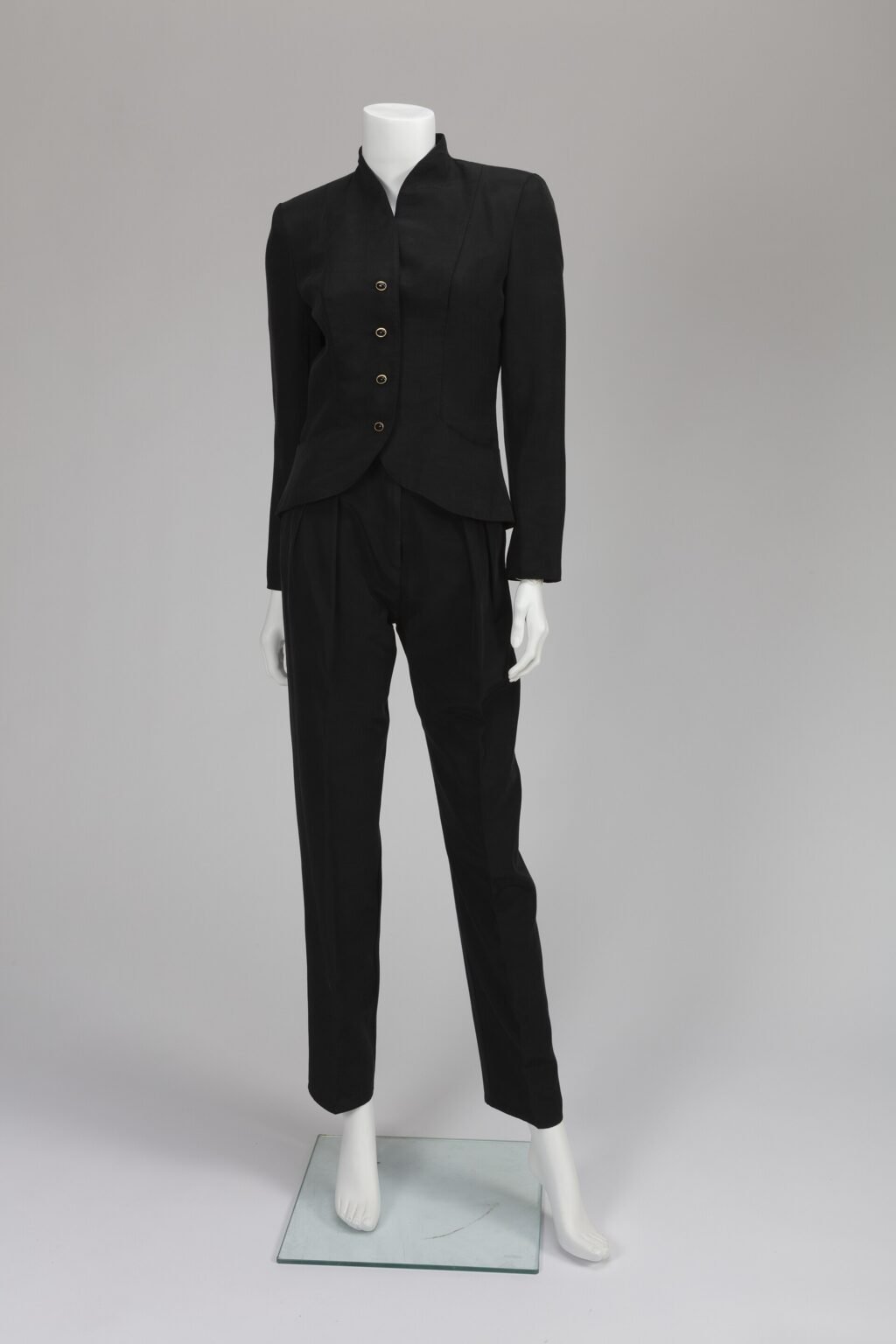
Photo: “Woman’s Black Pantsuit by Willi Smith – DPLA – 5dcea7ed1d57dbec26a4659ed83cc879” by Willi Smith for WilliWear (object photograph via the Digital Public Library of America), no known copyright restrictions, via Wikimedia Commons.
Editor’s note: facts in this article were checked against the linked sources in November 2026. Smith’s birth, family, schooling, Parsons scholarships, Scaasi apprenticeship, Digits, the Bombay trip, WilliWear’s founding roles, showroom addresses, the Holly Solomon Gallery debut, the Ailey presentation, Artventure at AREA, the $25 million figure, his death and Willi Smith Day come from Cooper Hewitt’s digital exhibition and its timeline; the year of Willi Smith Day is not given there and is not stated here. The Puck Building, City Island and Street Couture presentations, the 1982 menswear launch, the “first company” claim (attributed), the 1983 Coty win, School Daze and the 1990 end of production are from Wikipedia. Secret Pastures and the Kennedy–Schlossberg wedding details are from Cooper Hewitt. The museum’s exhibition dates are from its “About the Exhibition” page. The Fashion Walk of Fame quotations are from the BID’s archived page. The featured image is a museum object photograph and is not dated in its record.